 619-342-8000
Your manager told you the company needs “fresh energy” during the same meeting where they announced your position was being eliminated. Three younger employees with less experience kept their jobs. HR claims the decision was based on a “strategic realignment,” but you’ve noticed that the layoffs only affected workers over 50.
Age discrimination in the workplace means treating an employee or job applicant less favorably because of their age. California law and federal protections make this conduct illegal when it affects workers who are 40 years old or older.
If you’re experiencing age-based treatment at work in San Diego, understanding what the law protects helps you recognize whether your employer’s conduct crosses legal boundaries. To discuss a workplace age discrimination concern, contact a trusted, trauma-informed discrimination attorney at Haeggquist & Eck.
Schedule a Free Case Evaluation
Key Takeaways for California Workplace Age Discrimination
- California’s Fair Employment and Housing Act (FEHA) and the federal Age Discrimination in Employment Act (ADEA) protect workers age 40 and older from employment discrimination based on age
- Age discrimination can affect any employment decision including hiring, firing, promotions, pay, benefits, job assignments, training opportunities, and layoffs
- Coded language like “overqualified,” “not a culture fit,” or “looking for fresh energy” may signal age bias when directed at older workers and followed by adverse employment actions
- You can file age discrimination complaints with California’s Civil Rights Department (three-year deadline under FEHA) or the federal EEOC (300-day deadline under ADEA)
- Age-based harassment that creates a hostile work environment violates California law even if it doesn’t result in termination or demotion
California Law Protects Workers 40 and Older From Age Discrimination
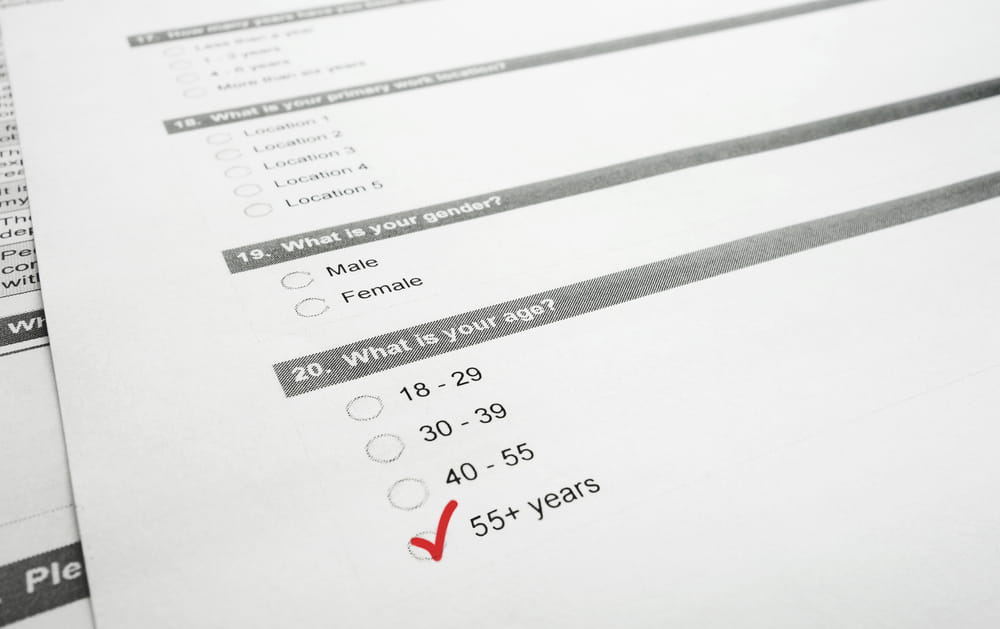
The Fair Employment and Housing Act (FEHA) prohibits employers with five or more employees from discriminating against workers based on age. FEHA protections apply to employees and job applicants who are 40 years old or older. The law covers all aspects of employment, including hiring, firing, pay, job assignments, promotions, layoffs, training, fringe benefits, and any other term or condition of employment.
Federal law provides similar protections through the Age Discrimination in Employment Act (ADEA) which applies to employers with 20 or more employees. Like FEHA, the ADEA protects workers age 40 and older. California law often provides broader coverage because it applies to smaller employers and offers longer filing deadlines.
Age discrimination occurs when an employer treats someone less favorably because of their age. This includes decisions motivated entirely by age and decisions where age was a substantial motivating factor, even if other reasons also contributed. The law prohibits both intentional discrimination and policies that disproportionately harm older workers without legitimate business justification.
What Age Discrimination Looks Like in Hiring and Promotions
Age discrimination affects workers at every career stage, from initial job applications to advancement within a company. Understanding how bias appears in hiring and promotion decisions helps you recognize when age motivates your employer’s conduct.
Age Discrimination in Hiring Practices
Age discrimination in hiring happens when employers screen out older applicants or refuse to hire qualified candidates because of their age. Job postings that specify “recent college graduates,” “digital natives,” or similar language may discourage older workers from applying and can signal discriminatory intent. Interview questions about when you graduated from high school or college, your plans for retirement, or whether you can work with younger supervisors may reveal age bias.
Employers sometimes use coded language to disguise age-based hiring decisions. Telling an applicant they are “overqualified” for a position they applied for may mean the employer believes the candidate is too old. While legitimate overqualification concerns exist, the term often serves as a pretext for age discrimination when the employer rejects experienced candidates in favor of younger, less qualified applicants.
Promotion Denials and Career Advancement Barriers
Promotion discrimination occurs when an employer passes over qualified older employees for advancement opportunities and instead promotes younger workers with less experience or weaker qualifications. If you consistently received positive performance reviews, met all promotion criteria, and applied for advancement but were repeatedly denied while younger colleagues moved up, that pattern may indicate age discrimination.
Some employers exclude older workers from training programs, professional development opportunities, or high-visibility projects that lead to promotions. When these exclusions occur alongside comments about wanting “new blood” or building a “younger team,” they strengthen claims of age-based bias.
Age Discrimination in Layoffs and Forced Retirement
Layoffs and workforce reductions create opportunities for age discrimination when employers disproportionately target older workers for elimination. If a company announces layoffs and the majority of terminated employees are over 40 while younger workers with similar or worse performance records keep their jobs, that pattern suggests age discrimination.
Employers may describe these decisions as performance-based or budget-driven, but the real motivation may be replacing higher-paid, experienced workers with younger employees who earn less. Age discrimination in layoffs often involves:
Targeting older workers during restructuring:
- Eliminating positions held by older employees while creating substantially similar roles with different titles
- Laying off older workers while simultaneously hiring younger replacements
- Using performance metrics applied inconsistently to justify terminating older employees
Pressuring older workers to retire:
- Repeatedly suggesting an employee should consider retirement
- Offering “voluntary retirement” packages under circumstances that make continued employment untenable
- Creating hostile working conditions designed to force older workers to resign
Age-based selection criteria:
- Using factors like salary history or years of service as layoff criteria, which disproportionately affects older workers
- Evaluating employees on “cultural fit” or “adaptability” in ways that disadvantage experienced workers
California law prohibits forced retirement. An employer cannot require you to retire at a specific age unless your job falls within a narrow exception for certain high-level executives or public safety positions with legitimate age-related qualifications.
Age-Based Harassment and Hostile Work Environment
Age discrimination doesn’t always appear in hiring or termination decisions. Sometimes it creates a toxic atmosphere that makes work unbearable through ongoing harassment and hostile treatment.
When Age-Based Comments Become Illegal Harassment
Age-based harassment creates a hostile work environment when unwelcome conduct based on age becomes severe or pervasive enough to alter working conditions. Harassment can include offensive comments about age, jokes targeting older workers, exclusion from workplace activities, or assignment of demeaning tasks based on age stereotypes.
Examples of age-based harassment include supervisors or coworkers making repeated comments like “you’re too old to understand this technology,” “when are you going to retire and make room for younger talent,” or “we need people who can keep up, not dinosaurs.” Isolated comments may not rise to the level of illegal harassment, but patterns of age-related ridicule, especially when combined with other discriminatory treatment, can create a hostile environment.
Exclusion, Isolation, and Demeaning Assignments
Age harassment often intersects with other forms of discrimination. Older workers may face exclusion from team meetings, social events, or collaborative projects while younger employees receive invitations and opportunities. Supervisors may assign older employees to less desirable tasks, shifts, or locations while giving younger workers preferable assignments, particularly when accompanied by age-related comments.
An employer’s failure to stop age-based harassment after learning about it can create liability even if the employer didn’t initiate the conduct. If you report harassment to HR or management and they ignore your complaint, fail to investigate, or take no corrective action, that failure can support a discrimination claim.
When “Culture Fit” and “Overqualified” Signal Age Bias
Employers use subjective terminology to justify employment decisions, but certain phrases often mask age discrimination.
Decoding “Culture Fit” Rejections
“Not a culture fit” may signal age discrimination when employers use it to reject older candidates or employees while hiring or promoting younger workers. While employers can make decisions based on legitimate cultural concerns, such as work ethic or communication style, “culture fit” becomes problematic when it really means “we want younger employees” or “you don’t fit our youthful image.”
The “Overqualified” Red Flag
“Overqualified” frequently appears in rejection letters for older applicants. Employers sometimes claim they worry that overqualified candidates will leave for better opportunities or demand higher salaries. However, when a company consistently rejects experienced older applicants as overqualified while hiring younger candidates with adequate but lesser qualifications, the pattern could suggest age bias rather than legitimate business concerns.
Other Coded Language That Masks Age Bias
Other coded language that may indicate age discrimination includes comments about wanting “fresh perspectives,” “new energy,” “digital natives,” or employees who are “hungry” or “ambitious” — terms that may imply older workers lack these qualities. Phrases like “we’re looking for someone who can grow with the company” or “long-term investment” suggest the employer might want younger workers they can employ for decades.
Age Discrimination in Compensation and Benefits
Age discrimination extends beyond hiring and termination decisions to affect how employers pay workers and structure benefits packages.
Pay Disparities Based on Age
Pay discrimination based on age violates California law. Employers cannot reduce an older employee’s salary, deny raises, or pay older workers less than younger employees performing substantially similar work because of age. If you discover a younger colleague with comparable experience and responsibilities earns significantly more, and the employer cannot explain the disparity with legitimate factors like education, performance, or market conditions, age discrimination may explain the gap.
Benefits and Retirement Programs
Benefits discrimination also violates FEHA and the ADEA. Employers cannot provide lesser benefits to older workers, though some limited exceptions exist for specific types of benefits where cost considerations create genuine differences. Health insurance, retirement contributions, and other benefits generally must be provided equally regardless of age.
Some employers create early retirement incentive programs that offer enhanced benefits to encourage older workers to leave. These programs can be lawful if truly voluntary, but they become discriminatory when employers pressure employees to accept, threaten those who decline, or make continued employment so difficult that retirement becomes the only realistic option.
Retaliation After Reporting Age Discrimination

Retaliation occurs when an employer punishes an employee for complaining about age discrimination, participating in an investigation, filing a complaint with the CRD or EEOC, or opposing discriminatory practices. Retaliation claims often stand independently from the underlying age discrimination claim.
Protected activities include reporting age discrimination to HR, management, or outside agencies, supporting a coworker’s age discrimination complaint, participating as a witness in an investigation, and requesting accommodation for age-related conditions. If any of these actions preceded termination, demotion, pay cuts, negative performance reviews, or hostile treatment, the timing may indicate retaliation.
California law prohibits retaliation even when the underlying age discrimination claim is difficult to prove. The key question is whether your protected activity motivated the employer’s adverse action. Documenting the timeline between your complaint and subsequent negative treatment strengthens retaliation claims.
Filing an Age Discrimination Complaint in California
Before filing a lawsuit for age discrimination under FEHA, you must file an administrative complaint with California’s Civil Rights Department. The CRD investigates complaints and issues right-to-sue notices that allow you to proceed to court.
Filing Deadline
You have three years from the discriminatory act to file with the CRD under FEHA. This deadline is significantly longer than the federal EEOC timeline, which requires filing within 300 days under the ADEA. Many workers file with both agencies through a work-sharing agreement that allows one complaint to satisfy both requirements.
Complaint Process
The CRD complaint process begins with an intake form describing what happened, identifying your employer, specifying that age was the basis for discrimination, listing witnesses, and explaining what adverse action occurred. After filing, the CRD may investigate by requesting information from your employer, interviewing witnesses, and reviewing documents. The CRD may also offer mediation to resolve the matter without further proceedings.
Resolution and Right-to-Sue
If the CRD investigation doesn’t result in a resolution, they issue a right-to-sue notice allowing you to file a lawsuit. You can also request an immediate right-to-sue notice without waiting for the CRD investigation to conclude. After receiving a right-to-sue notice, you generally have one year to file a lawsuit.
What to Document If You Suspect Age Discrimination
Documentation creates the foundation for proving age discrimination. Focus on gathering specific evidence while events remain fresh and memories are clear.
Write Down Incidents Immediately
Start by writing down specific incidents immediately after they occur, including dates, times, locations, what was said or done, who was present, and any witnesses. “Manager said ‘we need younger energy on this project’ during the April 10 team meeting at 10 AM, with Director Sarah Johnson present” provides stronger evidence than “manager made age-related comments last month.”
Preserve All Written Communications and Records
Save every document that relates to your employment and the discriminatory treatment:
Employment records:
- Performance reviews from before and after age-related treatment began
- Disciplinary notices or warnings
- Promotion applications and denial letters
- Job descriptions and offer letters
Communications:
- Emails, text messages, Slack, or Teams conversations with supervisors about age-related comments or complaints
- Your complaints to HR or management and their responses
- Messages showing how assignments, projects, or opportunities were distributed
Request your complete personnel file from your employer before they have motivation to alter records. California law requires employers to provide current and former employees access to their personnel files. Your file may contain internal communications that support or contradict your employer’s stated reasons for adverse decisions.
Document How Younger Employees Were Treated Differently
Document how your employer treated younger employees in similar situations. If younger colleagues received promotions you were denied, note their names, qualifications, when they were promoted, and how their credentials compared to yours. If younger employees violated policies without discipline while you faced punishment for similar conduct, record those specific examples with dates and details.
Create a Timeline of Events
Create a timeline showing the relationship between age-related comments or your complaints and subsequent adverse actions. A timeline that shows your manager questioned your “long-term commitment” on Monday, you complained to HR on Tuesday, and you received your first negative performance review on Friday suggests discriminatory motivation.
FAQ for California Workplace Age Discrimination
Is Age Discrimination Illegal Only If You’re 40 or Older?
Yes. Both FEHA and the ADEA protect workers age 40 and older. Discrimination against younger workers based on age is not illegal under these laws, though other legal theories might apply depending on the circumstances.
Can My Employer Ask My Age During the Hiring Process?
California law restricts age-related questions before hiring. Employers generally cannot ask your age, birth date, or graduation dates during interviews, as these questions may reveal age and create discrimination risks. After making a job offer, employers may request age information for legitimate purposes like benefits administration.
What If My Manager Is Older Than Me But Still Discriminated Based on Age?
Age discrimination can occur even when the decision-maker is older than the affected employee. The question is whether age motivated the decision, not whether the supervisor belongs to the same protected age group. An older manager who favors younger workers over employees in their 50s and 60s can still commit age discrimination.
Is Mandatory Retirement at Age 65 Legal in California?
Generally no. California law prohibits forced retirement for most employees regardless of age. Narrow exceptions exist for certain public safety positions and high-level executives with substantial retirement benefits, but these exceptions are limited and strictly interpreted.
How Long Do I Have to File an Age Discrimination Claim?
Under FEHA, you have three years from the discriminatory act to file a complaint with California’s Civil Rights Department. Federal ADEA claims through the EEOC must be filed within 300 days. Filing sooner preserves evidence and witness memories.
Talk With a San Diego Age Discrimination Attorney
Age discrimination often hides behind neutral-sounding business language and subjective decisions. What your employer calls “restructuring,” “culture fit,” or “performance concerns” may actually reflect illegal age bias when examined alongside timing, patterns, and how younger employees were treated differently.
Our team understands how age discrimination appears in terminations, layoffs, promotion denials, and hostile work environments throughout San Diego workplaces. We review documentation, analyze comparisons to younger employees, and assess whether your employer’s stated reasons withstand scrutiny. To discuss a workplace age discrimination concern in San Diego, contact Haeggquist & Eck.