
 619-342-8000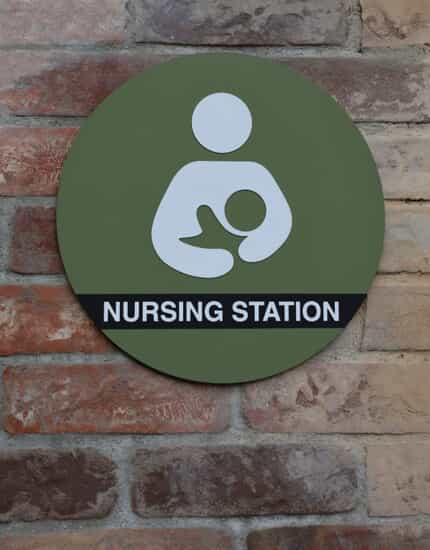
In years past, nursing mothers have found it exceedingly difficult or impossible to manage lactation at work. Whether it was a lack of sufficient breaks or a proper space to do so, it was simply infeasible for many to find the time or place to breastfeed their children or pump breastmilk.
The California legislature initially passed a 1998 resolution that merely encouraged employers to accommodate the needs of nursing mothers by providing a space for them to express breastmilk for their children. Four years later, it became state law to provide these employees with breaks and other important accommodations.
When the Affordable Care Act (ACA) passed in 2010, it became federal law for employers to provide lactation breaks for nursing mothers when the employer is subject to the Fair Labor Standards Act (and most are). Additionally, this federal statute mandated providing employees with reasonable unpaid breaks needed to express breastmilk for up to one year after their child’s birth.
At the beginning of 2020, however, California passed a new series of requirements in SB142 that exceed the ACA’s federal protection for lactation accommodation nationwide.
What SB142 Provides To Nursing Mothers as of 2020
Signed into law almost a year ago, SB142 is an act that amends sections of California’s labor code to expand protections for nursing mothers and provide a greater level of accommodation than ever before.
Lactation Location
While California employees have long enjoyed a requirement to provide a place other than the bathroom where nursing mothers can breastfeed or pump breastmilk, SB142 specified new requirements for this type of space at a worksite.
Under California law, a lactation location must:
- Be safe, clean, and free of any hazardous materials
- Be shielded from view and free from intrusion while an employee is using it to express breastmilk or feed
- Have a surface where the employee can place lactation gear (such as a breast pump) and other personal items
- Have a place for the employee to sit
- Have access to electricity by means of an outlet, extension cords, or battery power so as to power or charge a breast-pump
An employer must also provide a sink with running water and a refrigerator for storing milk (or a cooler) within a reasonable proximity to the employee’s workstation. Should a room with multiple uses include lactation as one such use (such as a meeting room), lactation must be considered its primary use and the room must be equipped as such.
Number & Duration of Lactation Breaks
California doesn’t explicitly state how many lactation breaks an employee may take or how long they are permitted to last. Instead, employers are required to provide a reasonable amount of time for employees to express breast milk. Breaks that can align with a non-exempt employee’s scheduled breaks are treated as such, however, the employer may not restrict the number of additional unpaid rest breaks the employee needs to express breast milk.
Employers Must Have Stated Lactation Policies
Another new requirement provided by SB142 requires employers to have a policy on lactation accommodation. Employees must be made away of this policy at the time of hire and when they ask about or request parental leave.
An employer’s policy must provide the following:
- A statement affirming the employee’s right to request accommodation for lactation
- Information about how the employee can request accommodation
- The employer’s obligation to respond to the request for lactation accommodation
- A statement that affirms the employee’s right to file a complaint about any violation of the law
Exceptions To Lactation Requirements
There are, of course, certain exceptions to California’s lactation accommodation laws that apply to certain employees and employers. These are typically applicable to smaller employers who are operating their businesses out of multi-tenant office buildings that may not be built with certain amenities.
When providing accommodation for lactation would provide a hardship upon the employer, only those with 50 or few employees can apply for an exemption. A hardship cannot be mere inconvenience – employers may only successfully obtain an exemption if they can prove that lactation accommodation would cause significant problems considering the employer’s size, nature of work, structure of business, or available financial resources.
Do You Need To Fight For Lactation Accommodation?
Haeggquist & Eck, LLP fights on behalf of employees whose rights were violated by their employers. We can assist nursing mothers who aren’t being given the time they are entitled to express breastmilk at work fight back for fair and just compensation from their employers. Rest assured that your rights are protected by law, and our attorneys can help you hold your employer accountable should you not be given the reasonable amount of time you need or any other reasonable lactation accommodation.
Schedule a free case evaluation with Haeggquist & Eck, LLP today to learn more. Contact us online or call (619) 342-8000 to get in touch with someone who can help.