
 619-342-8000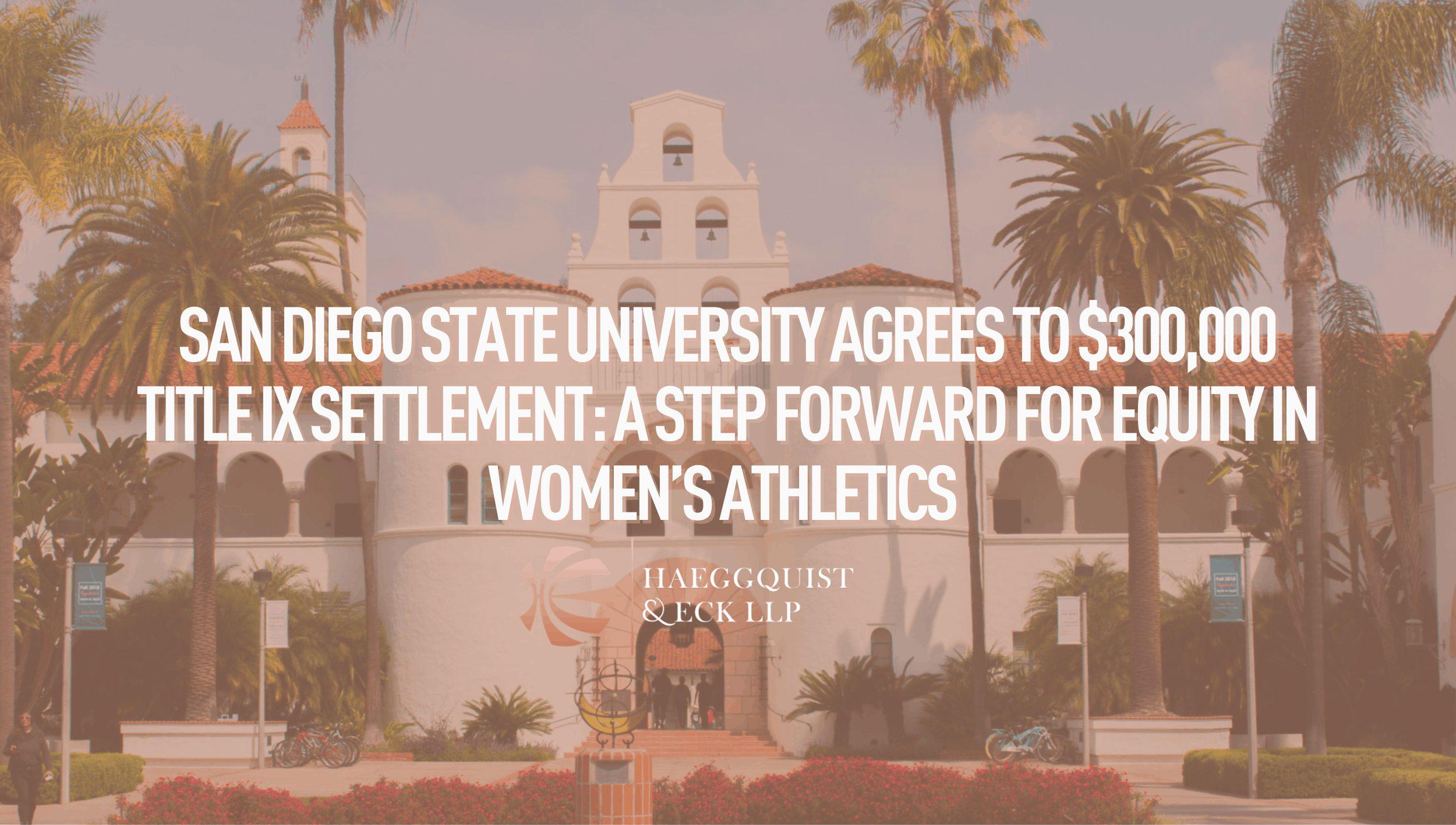
San Diego State University has agreed to pay $300,000 to resolve a Title IX class action lawsuit brought by female student-athletes who alleged unequal treatment in the university’s athletics program. The settlement represents more than a financial resolution. It marks a meaningful moment in the ongoing effort to enforce gender equity in collegiate sports and ensure that institutions are held accountable when disparities persist.
At the center of the case were allegations that female athletes at San Diego State University were not afforded the same opportunities and benefits as their male counterparts, particularly with respect to athletic scholarships. While Title IX has long required equal access and treatment in educational programs, including athletics, enforcement has historically focused on participation opportunities rather than the equitable distribution of financial resources. This case begins to shift that focus in a significant way.
A Landmark Focus on Scholarship Inequities
This settlement is notable because it directly addresses disparities in scholarship allocations, an area that has often been more difficult to quantify and litigate. By tying compensation to alleged inequities in scholarship funding, the resolution signals a growing recognition that financial support is a critical component of equal opportunity under Title IX.
In practical terms, scholarships can determine whether an athlete is able to attend and remain at a university. Disparities in this area do not simply reflect administrative oversight; they can fundamentally alter the educational and athletic trajectories of student-athletes. Addressing these inequities moves beyond symbolic compliance and into substantive equality.
Years of Advocacy and Litigation
The outcome reflects years of sustained effort by a dedicated legal team, including Jenna Rangel and Amber Eck of Haeggquist & Eck, LLP in San Diego, Arthur Bryant of Arthur Bryant Law in Oakland, Lori Bullock of Bullock Law, PLLC in Des Moines, Iowa, and Gayle Blatt and David Casey of Casey Gerry Francavilla Blatt LLP in San Diego. The case began during the early stages of the COVID-19 pandemic, a time when collegiate athletics programs across the country were undergoing significant disruption and scrutiny.
Despite those challenges, the legal team continued to advance the case, working alongside student-athletes to investigate, develop, and ultimately resolve complex claims involving systemic inequities. Litigation of this nature often requires not only legal strategy, but also persistence in the face of institutional resistance and evolving factual landscapes.
The Role of Courage in Driving Change
At its core, this case is about the student-athletes who came forward. Challenging a university system can carry personal and professional risks, particularly for individuals whose academic and athletic futures are closely tied to that institution.
Their willingness to speak out underscores a broader truth about civil rights enforcement: meaningful change frequently begins with individuals who are prepared to question entrenched practices. In the Title IX context, these actions help illuminate disparities that might otherwise remain unaddressed.
Accountability and the Future of Title IX Enforcement
This settlement reinforces a critical legal and institutional principle. When entities are held accountable under the law, progress follows. While no single case can resolve all inequities in collegiate athletics, outcomes like this contribute to a broader framework of enforcement that shapes how universities allocate resources, evaluate compliance, and prioritize equity.
The implications extend beyond one campus. As institutions across the country continue to assess their Title IX obligations, this case may serve as a reference point for how scholarship disparities are analyzed and addressed. It also signals to student-athletes that the law provides a viable path to challenge inequities and seek meaningful remedies.
Looking Ahead
The resolution of this case represents both an achievement and a reminder. It reflects the impact of sustained advocacy, strategic litigation, and the voices of those directly affected. At the same time, it highlights the ongoing responsibility of educational institutions to ensure that equity is not only promised, but practiced.
As Title IX enforcement continues to evolve, cases like this help define what compliance looks like in real terms. They underscore that equal opportunity in athletics is not limited to participation alone, but includes the full range of benefits, resources, and support that shape the student-athlete experience.