
 619-342-8000
Your paycheck is short by several hours you know you worked. Your employer asks you to clock out and finish tasks off the clock. You’re salaried and work 50-hour weeks, but your boss says overtime doesn’t apply to you. You’ve worked the same job as your coworker for two years, but he earns $4 more per hour for substantially similar work. Your final paycheck after termination doesn’t arrive on your last day.
When your pay doesn’t match your work, the problem might be simple confusion—or it might be wage theft, misclassification, or pay discrimination. California law and San Diego’s local wage ordinances create strong protections for workers, but understanding which law applies, what counts as a violation, and what steps to take can feel overwhelming when you’re dealing with missing income. A San Diego employment lawyer at Haeggquist & Eck can help you understand your options.
Schedule a Free Case Evaluation
Key Takeaways for San Diego Wage and Hour Issues
- Wage theft can include unpaid wages, shorted paychecks, off-the-clock work, missed meal and rest breaks, unpaid overtime, tip violations, and late final paychecks
- Not all salaried workers are exempt from overtime, and California uses strict tests based on job duties and minimum salary thresholds
- If your employer controls your work, you perform the company’s core business, or you’re not running your own independent business, you may be misclassified as an independent contractor and owed overtime, meal breaks, and expense reimbursement
- As of January 1, 2026, City of San Diego employers must pay at least $17.75 per hour, while California’s state minimum is $16.90 per hour
- Document everything before taking action: keep copies of pay stubs, time records, schedules, communications about pay or hours, and any evidence of work performed off the clock or during missed breaks
What Counts as Wage Theft in California?
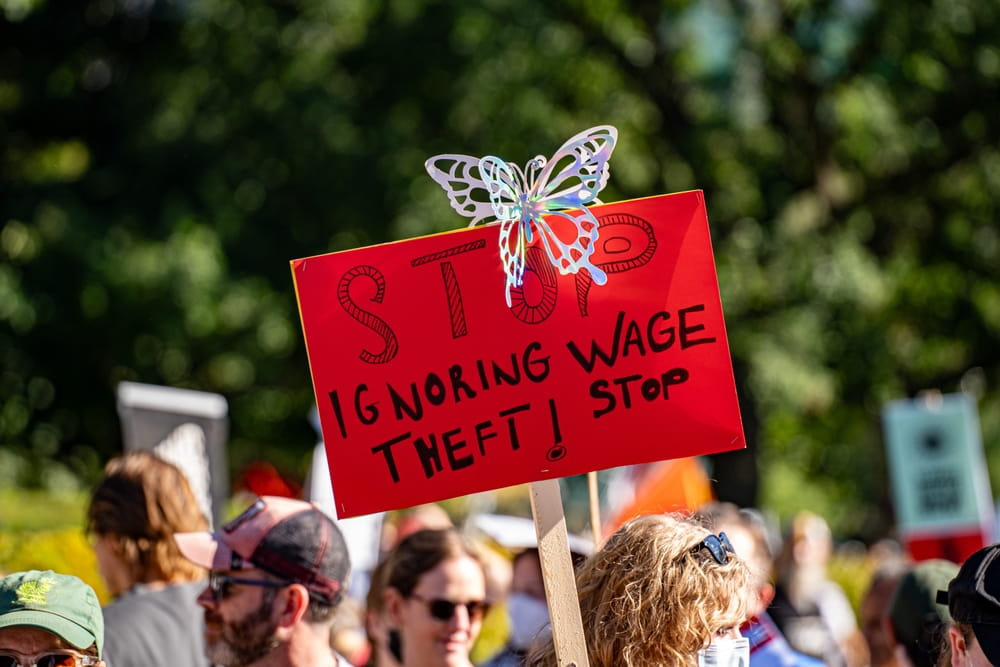
Wage theft occurs when an employer fails to pay wages you’ve earned. This includes unpaid regular hours, unpaid overtime, off-the-clock work, missed meal or rest break premiums, withheld commissions or bonuses, tip theft, illegal paycheck deductions, and late final paychecks.
California law requires employers to pay all wages owed on regular paydays.
If you work hourly, you must be paid for every hour worked, including time spent in mandatory training, travel between job sites during the workday, and work performed before clocking in or after clocking out. Employers cannot require you to work off the clock, round time entries in ways that consistently short your hours, or fail to pay for small amounts of time that add up over pay periods.
Overtime violations are common.
California requires overtime pay (1.5 times your regular rate) for hours over 8 in a workday or 40 in a workweek, and double time for hours over 12 in a workday or over 8 on the seventh consecutive day of work. If your employer miscalculates your overtime rate, excludes certain hours from overtime calculations, or claims you’re exempt when you’re not, you may be owed substantial back pay.
Meal and rest break violations create additional liability.
Non-exempt employees must receive a 30-minute unpaid meal break for shifts over 5 hours and a second meal break for shifts over 10 hours. Rest breaks (10 minutes paid for every 4 hours worked) are also required. If your employer denies these breaks or creates conditions that prevent you from taking them, you’re owed one hour of pay at your regular rate for each missed break.
Tip pooling violations harm service workers.
California law allows mandatory tip pooling among employees in the chain of service (this can include some workers who don’t provide direct table service), but managers and supervisors cannot share in tips. Requiring tip-outs to employees who are part of the chain of service may be lawful, but requiring tip-outs to managers, supervisors, or owners is not.
Final paycheck timing matters.
California requires employers to pay all final wages immediately upon termination or within 72 hours if you resign without notice. Waiting time penalties accrue if your employer misses this deadline, and you can potentially recover up to 30 days of additional wages as a penalty for late payment.
Unpaid Overtime: Are You Really Exempt?

Some California workers are misclassified as exempt from overtime when they should be paid hourly with overtime protections. Employers sometimes label positions “salaried” or “management” and assume that means no overtime is owed, but California law sets strict requirements for exemptions.
The executive exemption requires that you spend more than 50% of your time managing the enterprise or a recognized department, regularly direct the work of two or more employees, and have authority to hire, fire, or make recommendations that carry particular weight. Simply having “manager” in your title doesn’t make you exempt.
The administrative exemption requires that you perform office or non-manual work directly related to management or general business operations, and regularly exercise discretion and independent judgment on significant matters. Clerical work, data entry, and routine tasks don’t qualify.
The professional exemption applies to employees who perform work requiring advanced knowledge in a field of science or learning, typically acquired through prolonged specialized study. This generally covers licensed professionals like doctors, lawyers, and engineers—not jobs that require only on-the-job training or technical skills.
All three exemptions require that you earn a salary of at least twice the state minimum wage for full-time employment. As of January 1, 2026, with California’s minimum wage at $16.90 per hour, the minimum salary for most white-collar exemptions is $70,304 annually (calculated as $16.90 × 2 × 2,080 hours).
Independent Contractor Misclassification and AB 5
Some employers classify workers as independent contractors (often receiving 1099 forms instead of W-2s) to avoid paying overtime, payroll taxes, workers’ compensation, and other benefits. California’s AB 5 law uses the ABC test to determine whether someone is truly an independent contractor or should be classified as an employee.
Under the ABC test, you’re an employee unless your employer can prove all three factors:
(A) you’re free from the company’s control and direction in performing the work,
(B) you perform work outside the usual course of the company’s business, and
(C) you’re customarily engaged in an independently established trade, occupation, or business of the same nature as the work performed.
This test is strict. If a rideshare company controls when and how you work, or if a restaurant hires you as a “contractor” to cook food (the restaurant’s core business), you may be misclassified as an independent contractor.
City of San Diego Minimum Wage and California State Minimum Wage
San Diego employers must comply with both state and local minimum wage laws, and workers receive whichever rate is higher. As of January 1, 2026, the City of San Diego minimum wage is $17.75 per hour, while California’s state minimum wage is $16.90 per hour.
The City of San Diego ordinance applies to employees who work at least two hours per week within San Diego city limits. If you work in the City of San Diego, your employer must pay at least $17.75 per hour, regardless of where the company is based. Employers who pay less than the applicable minimum wage may owe back pay for the difference, plus penalties and interest.
Tipped employees in California must receive the full minimum wage, and employers cannot take a tip credit to reduce base pay below minimum wage.
What to Do First: Document Before You Act

Before filing a complaint or contacting a lawyer, gather evidence. Wage and hour cases depend on documentation, and the more you preserve now, the stronger your position later.
Keep records of:
- Pay stubs showing dates, hours worked, pay rates, deductions, and wages paid
- Time records, timesheets, or punch-in/punch-out data (screenshots if digital)
- Work schedules showing when you were scheduled versus when you actually worked
- Communications about pay, hours, overtime, or work assignments (emails, texts, workplace messaging apps)
- Notes or a journal documenting off-the-clock work, missed breaks, or verbal instructions to work without clocking in
- Copies of any written policies about pay, overtime, breaks, or timekeeping
- Final paycheck information and the date it was provided
If your employer uses a digital timekeeping system, take screenshots or save records before you lose access. If you track your own hours, keep detailed notes with dates, start times, end times, and tasks performed.
California law prohibits retaliation against employees who discuss wages, file complaints, or assert their rights. Documenting your pay concerns is protected activity, but be smart about how you gather information: don’t access systems you’re not authorized to use or take confidential information beyond what relates to your own employment.
When to File an Internal Complaint vs. Going External
Once you’ve documented the problem, you have options: raise the issue with your employer, file a claim with California’s Labor Commissioner, or consult an attorney.
Internal Complaint to Your Employer
Sometimes wage issues result from payroll errors, miscommunication, or managers who don’t understand California wage law. If you have reason to believe the problem is unintentional and your employer has responded to concerns in the past, consider raising the issue in writing: “I’ve noticed my paycheck for [dates] is short by [hours/amount]. My records show I worked [hours] but was paid for [hours]. Can we review the timecards and correct this?”
Put it in writing (email to HR or your supervisor) so there’s a record. If your employer fixes the problem and pays you what’s owed, that may resolve it. If your employer ignores you, retaliates, or refuses to pay, you’ll have documentation that you tried to resolve it internally before escalating.
Filing a Wage Claim with California’s Labor Commissioner
The California Labor Commissioner’s Office (DLSE) investigates wage claims and can order employers to pay back wages, penalties, and interest. You can file a claim online, by mail, or in person. The Labor Commissioner handles claims for unpaid wages, unpaid overtime, meal and rest break violations, final paycheck violations, illegal deductions, and minimum wage violations.
Filing a wage claim is free. The Labor Commissioner will investigate, hold a hearing if necessary, and issue a decision. If you win, the employer must pay the award or appeal to superior court.
Many wage claims are subject to a three-year limitations period under California law, though some claims can have different deadlines depending on the statute and the forum. Waiting time penalties under Labor Code § 203 are generally subject to a three-year statute of limitation.
Consulting a San Diego Wage and Hour Lawyer
Some cases are too complex for a Labor Commissioner claim, involve significant amounts of unpaid wages, or benefit from legal representation from the start. A San Diego wage and hour lawyer can evaluate whether you have claims beyond simple underpayment, like misclassification, discrimination, retaliation, or systemic violations affecting multiple employees.
FAQ for San Diego Wage and Hour Issues
My Paycheck Is Short—What Should I Do First?
Compare your pay stub to your own records of hours worked, noting any discrepancies in regular hours, overtime hours, or pay rates. Document the shortage with dates, amounts, and screenshots or copies of timecards if available. Raise the issue in writing with your employer’s HR or payroll department, keeping a copy of your communication.
Am I Entitled to Overtime If I’m Salaried?
Being paid a salary doesn’t automatically exempt you from overtime. You’re only exempt if you meet California’s strict tests for executive, administrative, or professional exemptions. If you’re salaried but don’t manage employees, don’t exercise independent judgment on significant matters, or earn below the exemption threshold, you may be entitled to overtime.
What If I’m Being Forced to Work Off the Clock?
Working off the clock is illegal. Document every instance with dates, times, and what work you performed. Save any communications (texts, emails) asking or requiring you to work without clocking in. Raise the issue in writing with your employer, and if it continues, file a wage claim with the California Labor Commissioner or consult a lawyer.
What Happens If My Employer Doesn’t Pay My Final Paycheck on Time?
California requires employers to pay all final wages immediately upon termination or within 72 hours if you quit without notice. If your employer misses this deadline, waiting time penalties accrue, possibly up to 30 days of wages at your daily rate. File a claim with the Labor Commissioner or contact an attorney to recover your final wages plus penalties.
Is It Illegal That I’m Paid Less Than Coworkers Doing the Same Job?
Pay disparities can violate California’s Equal Pay Act if the difference is based on sex, race, or ethnicity, and you perform substantially similar work (similar skill, effort, responsibility, and working conditions). Your employer must prove the pay gap is based on seniority, merit, production, or another legitimate, job-related factor. Document your job duties, your coworkers’ duties, and any pay information available.
How Long Do I Have to File a Wage Claim in California?
Most wage claims must be filed within three years of the violation. Waiting time penalties under Labor Code § 203 are generally subject to a three-year statute of limitations. Don’t wait—deadlines are strict, and acting quickly preserves your rights and evidence.
You Don’t Have to Accept Short Paychecks
Wage and hour violations don’t fix themselves, and employers may not voluntarily hand over back pay once they realize the problem. The decisions you make now can shape what you can recover and how strong your case becomes.
At Haeggquist & Eck, our San Diego employment lawyers help workers recover unpaid wages, unpaid overtime, meal and rest break premiums, waiting time penalties, and damages for misclassification and pay discrimination. One phone call can clarify whether what you’re experiencing violates California wage laws, what evidence you need, and what steps to take next. To discuss an unpaid wages, overtime, or pay discrimination concern in San Diego, contact us.