 619-342-8000
Your supervisor pulled you aside after you mentioned needing a few adjustments for your pregnancy. Perhaps it was due to more frequent bathroom breaks, a stool at your retail station, or reassignment away from heavy lifting. Instead of working with you, they suggested you take unpaid leave “until things settle down” or hinted that your role might not be a good fit anymore.
California law is among the strongest pregnancy protections in the country. Pregnant employees have the right to reasonable accommodations, job-protected leave for pregnancy-related conditions, and freedom from discrimination, harassment, and retaliation.
A San Diego pregnancy discrimination lawyer can evaluate whether your employer’s actions violate California law and help you document the evidence needed to protect your rights. Contact Haeggquist & Eck, LLP to discuss your specific situation and explore your options.
Schedule a Free Case Evaluation
Key Takeaways for California Pregnancy Discrimination
- California’s Fair Employment and Housing Act (FEHA) and the Pregnancy Disability Leave law prohibit discrimination, harassment, and retaliation against pregnant employees and those affected by pregnancy-related medical conditions
- Employers must provide reasonable accommodations for pregnancy, childbirth, and related medical conditions, including modified duties, transfer to less strenuous work, and schedule adjustments
- Pregnancy Disability Leave provides up to four months of job-protected leave per pregnancy when you are disabled by pregnancy, childbirth, or a related medical condition
- After PDL, eligible employees may take California Family Rights Act leave for baby bonding, and Paid Family Leave provides partial wage replacement during bonding time
- Lactation accommodations are required by California law, including reasonable break time and a private space (not a bathroom) for expressing breast milk
California Law Prohibits Pregnancy Discrimination and Harassment
California’s Fair Employment and Housing Act (FEHA) makes it illegal for employers with five or more employees to discriminate against workers based on pregnancy, childbirth, or related medical conditions. Discrimination can include firing, demotion, denial of promotion, refusing to hire, forced unpaid leave, or any adverse treatment because of your pregnancy.
Pregnancy discrimination also includes treating pregnant employees less favorably than other workers with similar limitations. If your employer accommodates employees with temporary injuries or medical restrictions but refuses similar accommodations for pregnancy-related limitations, that disparity may violate California law.
Harassment based on pregnancy is also prohibited. Pregnancy harassment can include offensive comments about your body, intrusive questions about your plans to return to work, jokes about hormones or mood swings, or repeated suggestions that you should quit or take leave.
Federal law provides additional protections. The Pregnant Workers Fairness Act, which took effect in 2023, requires employers with 15 or more employees to provide reasonable accommodations for known limitations related to pregnancy, childbirth, or related medical conditions. The law applies even if the limitation does not qualify as a disability under the Americans with Disabilities Act.
Reasonable Accommodations for Pregnancy-Related Conditions
In most cases, California law requires employers to provide reasonable accommodations for pregnancy, childbirth, and related medical conditions unless doing so would impose an undue hardship on the business. Reasonable accommodations are modifications or adjustments that allow you to continue working safely during pregnancy or while recovering from childbirth.
What Are Reasonable Accommodations for Pregnancy?
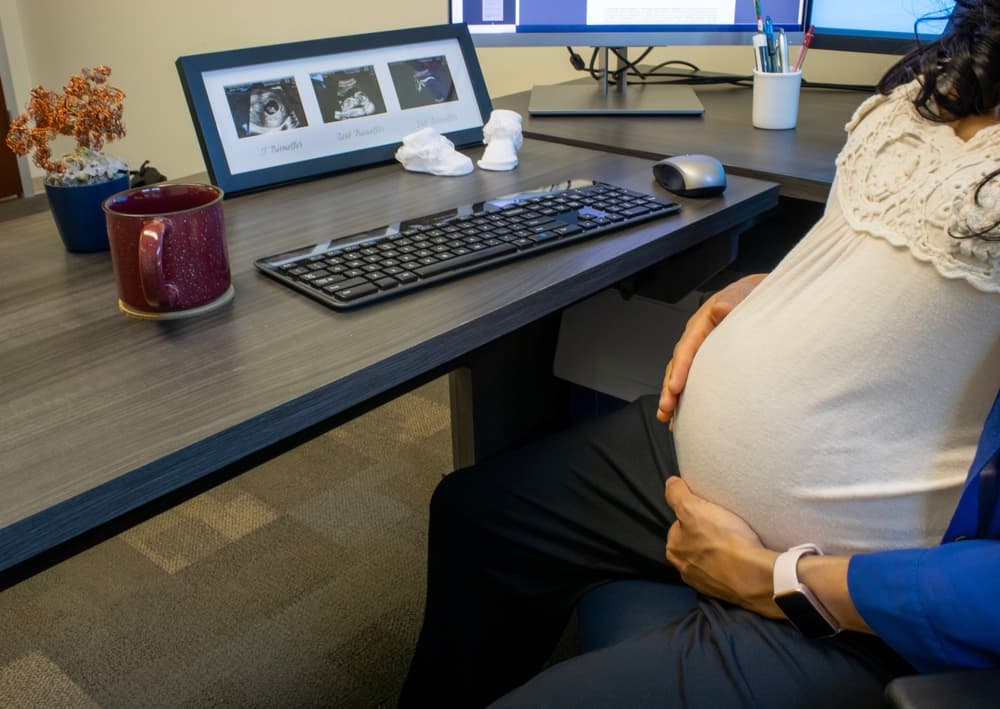
Pregnancy accommodations vary depending on your job duties and medical needs, but common examples include:
- More frequent bathroom breaks or breaks to rest
- A stool or chair if your job requires prolonged standing
- Temporary transfer to a less strenuous or hazardous position
- Modified work schedules or part-time hours
- Exemption from lifting heavy objects or performing physically demanding tasks
- Time off for prenatal appointments
- Adjusted uniforms or relaxed dress code policies
Your employer must engage in a good-faith interactive process when you request an accommodation. This means having a genuine conversation about your limitations and exploring possible solutions. Employers who refuse to discuss accommodations, dismiss your request without investigation, or retaliate against you for asking may violate California law.
Do I Have to Disclose My Pregnancy to Get Accommodations?
You do not have to disclose your pregnancy simply because you are pregnant. However, if you need workplace accommodations due to pregnancy-related limitations, you typically need to inform your employer of the limitation and request an adjustment.
Some employees worry that disclosing their pregnancy will lead to negative treatment. California law prohibits retaliation for requesting accommodations, and adverse actions that follow shortly after disclosure may support a claim of discrimination or retaliation.
Pregnancy Disability Leave Provides Job-Protected Time Off
California’s Pregnancy Disability Leave law provides up to four months of job-protected leave per pregnancy for employees disabled by pregnancy, childbirth, or related medical conditions. PDL applies to employers with five or more employees and covers time you cannot work due to pregnancy-related disability.
Who Qualifies for Pregnancy Disability Leave?
PDL is available to any employee who is disabled by pregnancy, childbirth, or a related medical condition, regardless of how long you have worked for the employer. Pregnancy disability means you are unable to perform your job duties due to a pregnancy-related condition. Common reasons for PDL include severe morning sickness, pregnancy complications, bed rest orders, childbirth recovery, postpartum depression, and complications from delivery.
How Often Can I Take PDL?
The four-month leave entitlement applies per pregnancy. If you have complications with one pregnancy that require leave, then become pregnant again, you are entitled to another four months of PDL for the second pregnancy. PDL can be taken intermittently if your doctor recommends it. For example, taking time off for severe morning sickness in the first trimester, then returning to work before taking additional leave for delivery and recovery.
Can My Employer Require Me to Take PDL?
Your employer cannot force you to take Pregnancy Disability Leave if you are able to work. If you can perform your job duties, or can do so with reasonable accommodations, your employer must allow you to continue working. Pressuring you to take unpaid leave when you are capable of working with accommodations may constitute pregnancy discrimination.
Baby Bonding Leave Under the California Family Rights Act
After your Pregnancy Disability Leave ends, you may be eligible for California Family Rights Act leave for baby bonding. CFRA provides up to 12 weeks of job-protected leave to bond with a new child. CFRA applies to employers with five or more employees, and you must have worked for your employer for at least 12 months and have at least 1,250 hours of service in the 12 months before your leave starts.
CFRA leave runs separately from PDL, meaning you can take up to four months of PDL followed by 12 weeks of CFRA bonding leave. This gives eligible employees up to seven months of combined job-protected leave. Both parents are entitled to CFRA bonding leave, and the leave must be taken within one year of the child’s birth, adoption, or foster placement.
While CFRA leave is job-protected, it is unpaid. However, you may be eligible for Paid Family Leave benefits through California’s Employment Development Department, which provides partial wage replacement for up to eight weeks while you bond with your new child.
Paid Family Leave Provides Wage Replacement for Bonding Time
California’s Paid Family Leave program, administered by the Employment Development Department, provides partial wage replacement when you take time off to bond with a new child. PFL typically replaces 60-70% of your wages, depending on your income, for up to eight weeks.
PFL is funded through employee payroll deductions, not employer contributions. This means you may qualify for PFL benefits even if your employer is too small to be covered by CFRA or if you do not meet CFRA’s eligibility requirements. PFL does not provide job protection on its own, but when taken in conjunction with CFRA, you have both income support and job security.
Lactation Accommodation Rights in California
California law requires employers to provide reasonable break time and a private space for employees to express breast milk. These protections apply to all employers, regardless of size, and continue for up to one year after your child’s birth.
Your employer must provide reasonable break time each time you need to express milk. The frequency and duration depend on your individual needs. While employers are not required to pay you for pumping breaks unless you are already entitled to paid breaks, they cannot retaliate against you for taking the time you need.
Your employer must provide a private space, other than a bathroom, that is shielded from view and free from intrusion. The space must be functional for expressing milk, with access to electricity and a place to sit. Employers cannot require you to pump in a restroom, storage closet, or other unsuitable location.
If your employer denies your request for lactation accommodations, claims it would be too disruptive, or retaliates against you for requesting break time, they may violate California law. Common forms of retaliation include disciplinary action for taking pumping breaks, reduction in hours, or creating a hostile environment that pressures you to stop pumping.
When Pregnancy-Related Termination May Be Illegal

Employers cannot fire you because you are pregnant, because you requested pregnancy accommodations, or because you took Pregnancy Disability Leave or other protected leave.
Timing is often the key factor in determining whether a termination was discriminatory. If you were performing your job satisfactorily, then disclosed your pregnancy or requested accommodations, and shortly afterward your employer terminated you or placed you on a performance improvement plan, that sequence may indicate discrimination.
Documentation is critical to a wrongful termination due to pregnancy discrimination claim. Performance reviews from before your pregnancy, emails requesting accommodations, medical documentation of your limitations, and witness statements about comments your supervisor made all help establish whether your employer’s stated reason for termination is legitimate or pretextual.
Some employers claim they cannot accommodate pregnancy limitations due to business needs or that the employee’s role requires certain physical tasks. However, California law requires employers to explore all reasonable accommodations, including temporary reassignment, before concluding that no accommodation is possible.
Retaliation for Requesting Pregnancy Accommodations or Leave
Retaliation occurs when your employer punishes you for asserting your rights under California’s pregnancy protection laws. Protected activities include requesting reasonable accommodations, taking Pregnancy Disability Leave, filing a complaint about discrimination, or opposing unlawful practices.
Retaliation can take many forms:
- Termination, demotion, or forced resignation
- Denial of promotions or raises you would otherwise receive
- Reduction in hours, shift changes, or reassignment to less desirable duties
- Increased scrutiny, unfair performance reviews, or sudden disciplinary actions
- Hostile treatment, exclusion from meetings, or isolation from coworkers
- Threats or pressure to resign
If adverse actions occurred shortly after you requested accommodations, disclosed your pregnancy, or took protected leave, the timing may indicate retaliation. California law prohibits retaliation even if the underlying accommodation request was denied or if your discrimination claim is difficult to prove.
Filing a Complaint with California’s Civil Rights Department
Before filing a lawsuit for pregnancy discrimination in California, you generally must file an administrative complaint with California’s Civil Rights Department. The CRD investigates complaints, attempts resolution through mediation, and issues right-to-sue notices that allow you to proceed to court.
Under FEHA, you generally have three years from the date of the discriminatory act to file a complaint with the CRD. This deadline is longer than many other employment law claims, but filing sooner preserves evidence and witness memories. The CRD complaint process begins with an intake form where you describe what happened, identify witnesses, and provide documentation.
The CRD may investigate your complaint, facilitate mediation, or issue a right-to-sue notice without a full investigation. Receiving a right-to-sue notice allows you to move forward with a lawsuit. It does not indicate the CRD determined your claim lacks merit.
Steps to Take if You Experience Pregnancy Discrimination in San Diego
If you believe your employer discriminated against you because of your pregnancy, start by documenting everything. Write down dates when you disclosed your pregnancy, requested accommodations, took leave, or experienced adverse treatment. Note who was involved, what was said, and who witnessed conversations. Save emails, text messages, and written communications related to your accommodation requests or termination.
Focus your documentation on these key details:
- When you disclosed your pregnancy and to whom
- Accommodation requests you made and your employer’s responses
- Performance reviews or feedback you received before and after disclosure
- Comments your supervisor or coworkers made about your pregnancy
- How your employer treated other employees with temporary limitations or medical restrictions
Request a copy of your personnel file. California law gives employees the right to inspect and receive copies of their personnel records. Your file may contain performance reviews, disciplinary records, or other documents that support or contradict your employer’s stated reasons for adverse actions.
Avoid signing separation agreements or releases without consulting an attorney. Many employers offer severance in exchange for releasing legal claims. Once you sign a release, you may forfeit your right to pursue a pregnancy discrimination claim.
FAQ for California Pregnancy Discrimination
No. California law prohibits firing employees because they are pregnant, plan to become pregnant, or have pregnancy-related medical conditions. If your termination occurred shortly after you disclosed your pregnancy or requested accommodations, that timing may support a discrimination claim.
California law requires employers to engage in the interactive process and explore all reasonable accommodations before concluding that none are available. If your employer dismissed your request without discussion or claimed accommodation is impossible without investigating options like temporary transfer or modified duties, they may have violated California law.
Yes. PDL and CFRA run separately. You can take up to four months of Pregnancy Disability Leave for pregnancy-related disability, then take up to 12 weeks of CFRA leave for baby bonding if you meet CFRA eligibility requirements. This provides up to seven months of combined job-protected leave.
California law protects your right to reasonable break time and a private space for expressing breast milk. If your employer disciplines you, reduces your hours, or creates a hostile environment because you exercise this right, that retaliation is illegal.
Your employer may request medical documentation confirming your limitation and the need for accommodation. However, you do not need to provide extensive medical details. A note from your healthcare provider stating that you need specific accommodations is typically sufficient.
California’s Fair Employment and Housing Act (FEHA) and the Pregnancy Disability Leave (PDL) law apply to employers who employ five or more workers. The California Family Rights Act (CFRA) also applies to employers with five or more employees.
Federally, the Pregnant Workers Fairness Act (PWFA) applies to employers who employ 15 or more workers.
Yes. The California Family Rights Act (CFRA) provides up to 12 weeks of job-protected leave for baby bonding to both parents, provided they meet the eligibility requirements. Both parents use California’s Paid Family Leave (PFL) program for wage replacement during that time.
Talk With a San Diego Pregnancy Discrimination Attorney Today
Pregnancy should not cost you your job, your income, or your dignity at work. Whether your employer violated California law depends on the specific facts, the timing of their actions, and whether they engaged in good faith when you requested accommodations or leave.
Our team of employment lawyers understand the financial and emotional pressure of fighting workplace discrimination while preparing for or caring for a new child. To discuss a workplace pregnancy discrimination concern in San Diego, contact Haeggquist & Eck, LLP.